Last updated: Nov 7, 2026
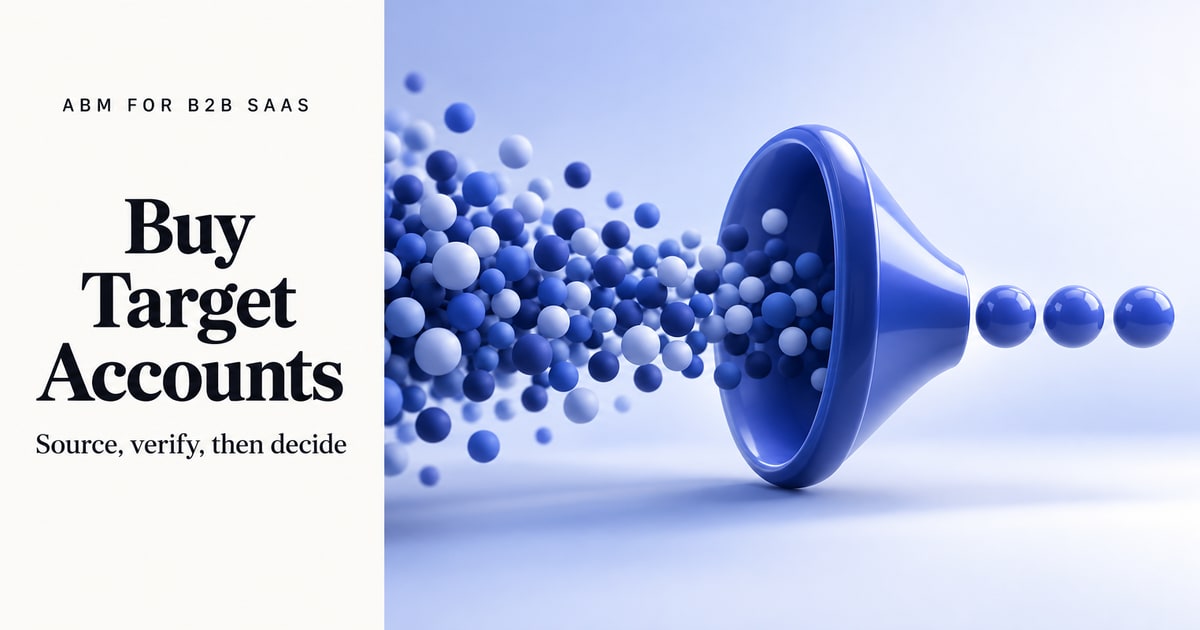
Buy Target Accounts: Where B2B SaaS Teams Source Lists
By ABM for B2B SaaS Editorial Team. Last updated October 28, 2026.
Where B2B SaaS teams source and buy target account lists: CRM history, data providers, intent platforms, manual research, plus a size-band test before you pay.
 Ishan ManchandaNov 7, 2026
Last updated: Nov 7, 2026
By ABM for B2B SaaS Editorial Team. Last updated October 28, 2026.
Attribution models compared by deal size, sales cycle and buying group. What first-touch, last-touch, U-shaped and W-shaped each measure and where they fail.
Published ranges for splitting B2B SaaS marketing budget across ABM, demand generation, and brand, with sources, sample status, and a tier-first method.
Fix account based marketing LinkedIn targeting: measure waste, exclude non-buyers, cover the buying group and scale from 50 to 200 target accounts.
Request a quote and our experts will contact you within 24 hours with tailored solutions and pricing.
To buy target accounts means to license a list of named companies that match your ideal customer profile (ICP), though teams can also source that list from CRM history, intent platforms, data providers or manual research. When leadership says to stand up account-based marketing (ABM) fast, buying is the first instinct. It is also the step most likely to burn early budget on companies outside your size band. This guide compares the four sourcing options, gives a sample test to run before you pay, and shows when building beats buying. For the underlying company data, see this explainer on firmographic data.
Key Takeaways
- Target account lists come from four sources: CRM closed-won history, manual research, data providers and intent platforms. Choose the cheapest source that covers your ICP.
- A 50 to 100 account sample, checked against an independent source, shows whether a vendor list fits your ICP size band before you sign.
- Contact data decays fast: a Q1 2026 vendor study measured 67% annualized decay (Cleanlist, 2026), against the traditional 30% a year.
- Small teams usually need a short, accurate list: the median ABM program targets 87 accounts, per a 2026 agency study (Visionary Marketing, 2026).
B2B SaaS teams source target account lists from four places: CRM closed-won history, intent platforms, commercial data providers and manual research. CRM history and manual research cost the least and fit the ideal customer profile best. Data providers and intent platforms add coverage and speed, but the buyer must confirm fit before spending on outreach.
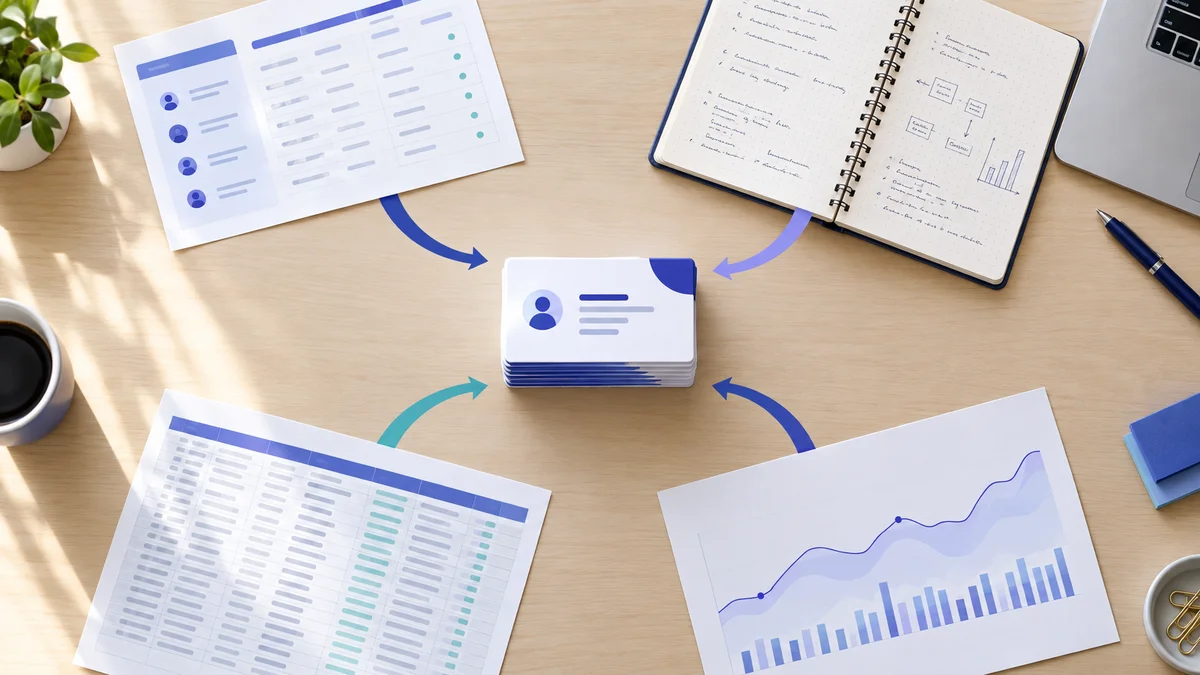
A target account list is a defined set of named companies that sales and marketing agree to work. The table shows when each source is the right choice. The ratings are editorial judgments, not measured data.
| Source | Choose it when | Speed | Coverage | Main risk |
|---|---|---|---|---|
| CRM closed-won history | You have past wins to learn from | Fast | Limited to known accounts | Repeats past bias |
| Manual research | The list is short and deal size is high | Slow | Narrow but precise | Time cost per account |
| Data provider list | You need many accounts quickly | Fast | Broad | Size-band skew and stale contacts |
| Intent platform | You can act on signals within days | Medium | Accounts showing activity | Inflated or unowned signals |
The no-purchase route is always an option. CRM history plus manual research costs only team time, and it gives a baseline against which any bought list can be judged.
Buying feels like the shortcut around a hard problem. In a 900-practitioner survey, 47% cite account selection complexity as a top ABM challenge (Visionary Marketing, 2026). The same agency reports that ABM-targeted accounts closed 27% faster at 31% higher contract value in its client portfolios, which makes list quality look worth buying. That is agency data with no independent audit, so treat it as directional.
The cost of getting it wrong is real. Respondents to a 750-leader survey said an average of 25% of marketing budget goes to efforts that fail to drive outcomes (DemandScience, 2025). That figure covers marketing spend in general, not purchased lists alone. DemandScience sells B2B data, so read it as vendor research.
A size-band check compares a vendor sample against the ideal customer profile (ICP) before any money changes hands. Ask for 50 to 100 accounts, verify employee count and revenue on an independent source, and compare the in-band share with closed-won accounts. With 51% of 900 surveyed practitioners naming data quality a top challenge (Visionary Marketing, 2026), the test is worth running.

A size band is the employee-count and revenue range of the companies that actually buy from you. No published figure shows how often bought lists miss that band, so the test has to be run, not assumed. Run it in this order:
Out-of-band companies and the wrong roles drain paid budget even when a company list looks right. The audit below is about LinkedIn ads, not purchased lists, but it shows how large the leak can be.
Our results: ABM for B2B SaaS's evidence base includes a June 2026 audit of 56 LinkedIn accounts and $9.4M in ad spend, published by GrowthSpree. In that audit, 20% of spend reached firms under 50 employees. Individual contributors and entry-level staff consumed 36% of budget. Decision-makers received 33% against a target of 60% or more.
Before trusting a vendor list, verify four things: size-band fit, data freshness, intent signal quality and contract terms. The evidence argues for caution. 51% of 900 surveyed ABM practitioners name data quality as a top challenge (Visionary Marketing, 2026), and a Q1 2026 study measured contact decay at 67% annualized (Cleanlist, 2026).
| Check | How to test it | Red flag |
|---|---|---|
| Size-band fit | Run the 50 to 100 account sample test | Low in-band share against your wins |
| Freshness | Ask for a "last verified" date per record, re-verify emails | No verification dates |
| Signal quality | Ask where each intent signal originates | Vendor cannot name the source |
| Contract terms | Read renewal, term length and overage clauses | Auto-renewal with no sample export |
Data decay is the rate at which contact records go out of date as people change roles, emails and employers. Cleanlist re-verified 5,000 anonymized CRM contacts every Monday for 13 weeks and found a 67% annualized decay rate, roughly double the traditional 30% per year. Its researchers put it this way: "The traditional 30%/year figure is roughly half the observed rate when measured continuously instead of annually." (Cleanlist, 2026) Cleanlist sells data enrichment, so present both numbers and re-verify either way.
Intent data is a set of signals, such as topic searches and review-site visits, that suggest an account may be researching a purchase. Reliability is the open question. In a survey of 750 senior marketing leaders, 87% called their intent signals unreliable or inflated, and only 26% of intent signals convert to qualified opportunities (DemandScience, 2025). DemandScience sells data and intent, so this is vendor research.
Its CMO described the pattern: "Too often, marketers see dashboards glow green, impressions scale, and lead goals exceeded" (DemandScience, via The Canadian Press, 2025). His point is that the resulting leads then convert at a low rate.
Speed matters too. Only 30% of ABM teams act the same day an account shows intent, while 38% take 2 to 3 days and 27% take up to a week (Userled, 2026). Userled's figures come from a vendor survey of 250+ practitioners. A workflow for acting on intent signals before they reset helps decide whether a platform will earn its place.
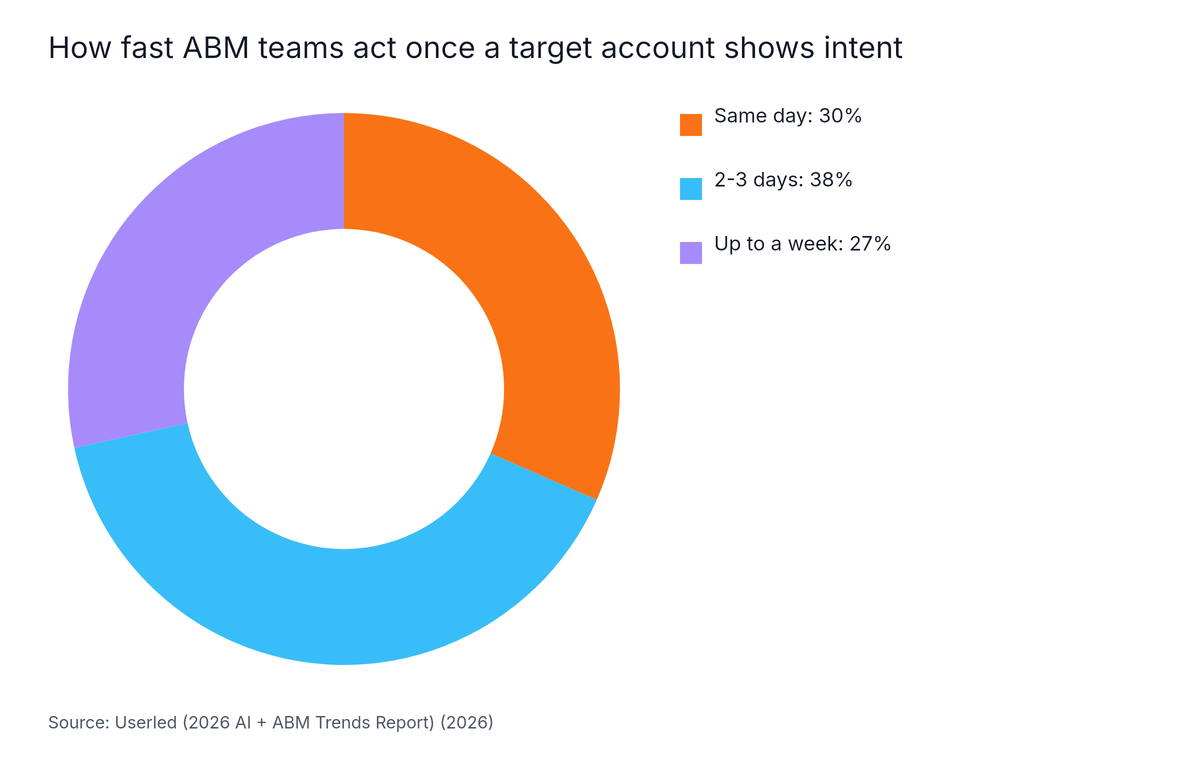
Source: Userled (2026 AI + ABM Trends Report), 2026
Forrester's Q1 2025 Wave covered 15 intent providers and advised buyers to match a provider's business model to their needs (Forrester, 2025). It also noted that many platforms resell the same intent source, so ask where a signal starts.
Teams should build a target account list from CRM history and manual research when a small team works named accounts at a modest deal size, and buy when coverage outruns what the team can research. The median ABM program in 2026 targets 87 accounts (Visionary Marketing, 2026), so most teams need a short, accurate list more than a large purchased one.

Oversized target account lists exceed what small teams can work. A June 2026 practitioner argument published by GrowthSpree makes the point with published ranges.
Our results: The same evidence base holds a published range with no stated sample: common ABM lists run 500 to 2,000+ named accounts at companies that should run 100 to 300 (GrowthSpree, June 2026). Recommended tiers are 10 to 50 accounts for 1:1, 50 to 200 in 5 to 15 clusters for 1:few, and 200 to 500 for 1:many.
Visionary's averages are lower still: 8 accounts for 1:1, 78 for 1:few and 840 for 1:many (Visionary Marketing, 2026).
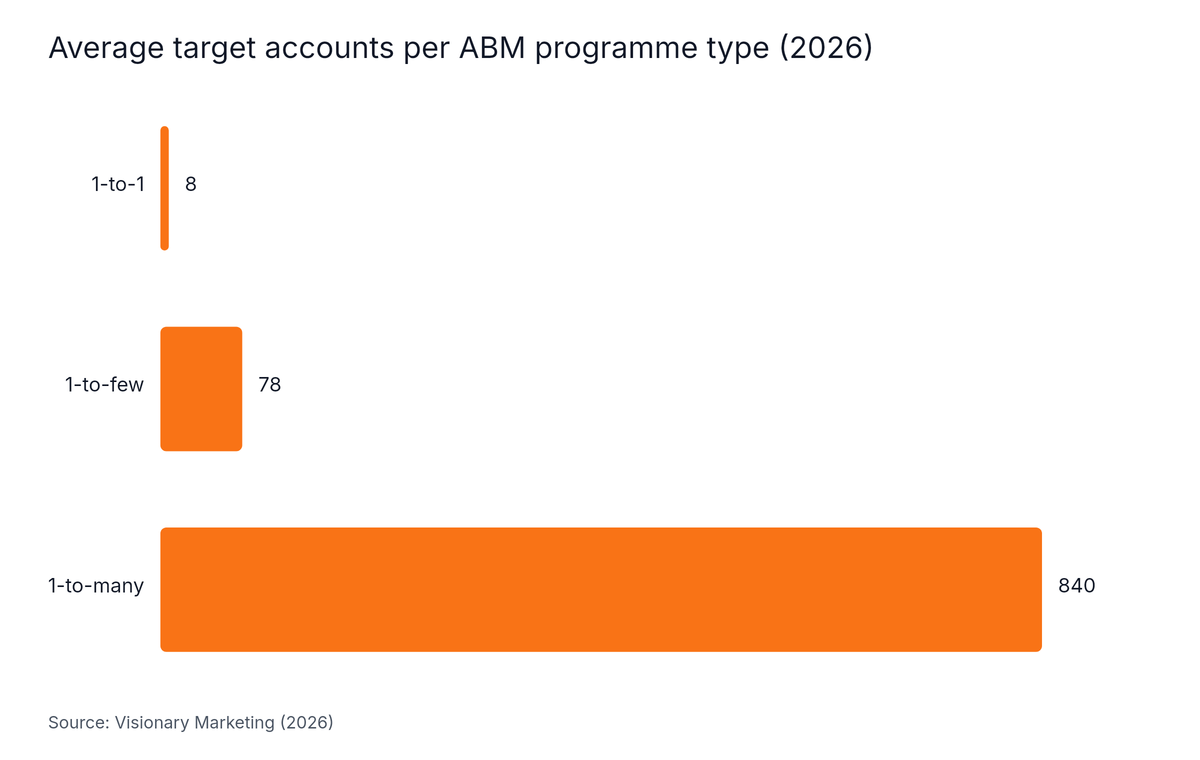
Source: Visionary Marketing, 2026
The grid below is editorial guidance, not measured data.
| Situation | Lean toward | Reason |
|---|---|---|
| Founder or one seller working named accounts | Build from CRM and manual research | Lists of 100 to 300 fit one person's capacity |
| Small SDR team with closed-won history | Build first, buy to fill gaps | Wins define the fit filter; vendor data adds lookalikes |
| Larger team, wide total addressable market (TAM), little history | Buy after the sample test passes | Coverage is the constraint, so verify fit first |
| Entering a new region | Buy a sample, then test regional coverage | Intent and contact coverage can differ by region |
Deal size sets how much you can spend per account. Published ranges, with no stated sample, put target cost per sales-qualified lead (SQL) at $1,000 to $3,000 for $15K to $50K annual contract value (ACV). They put it at $3,000 to $8,000 for $50K to $150K ACV, and $8,000 to $20,000 for $150K+ ACV. A list license that cannot beat the band for your ACV is a poor buy. More on tiering sits in this best practices guide.
Buying a target account list is the wrong move for teams with no closed-won history to test against, no one to work the accounts, or no way to verify a sample. 66% of 750 surveyed leaders say campaign metrics often look successful but fail to drive revenue (DemandScience, 2025), a risk that grows when nobody can check the list.
Three further caveats apply:
The evidence here has limits too. Most figures come from vendor or agency research, and none measures how often bought lists miss the size band. A list also proves nothing until it produces pipeline. Measure pipeline per target account, not accounts reached.
Buying a target account list is worth it only when a vendor sample passes a size-band and accuracy test and the team cannot research enough accounts itself. If a sample of 50 to 100 accounts shows a low in-band share or a high bounce rate, the money is better spent on research time and CRM analysis.
B2B contact data traditionally decays at about 30% a year, but a Q1 2026 weekly re-verification of 5,000 CRM contacts measured 67% annualized (Cleanlist, 2026). The study was run by a data-enrichment vendor, so treat the gap as a warning to re-verify any list before outreach starts.
A B2B SaaS team can build a target account list from CRM closed-won data because those accounts show the employee range, revenue band, industry and buying triggers that actually produced customers. Pull those traits, apply them to an outside data source for lookalikes, and keep the CRM as the free, first-party base of the list.
Before buying a list, ask the data vendor for an unfiltered sample of 50 to 100 accounts, a last-verified date per record, the origin of each intent signal, coverage for your regions, and the renewal, term and overage clauses. Verify emails and employee counts on a second source before signing.
The right number of target accounts per SDR depends on quota, deal size and win rate, and no verified per-rep benchmark exists. Published ranges suggest lists of 100 to 300 accounts for small teams (GrowthSpree, June 2026, no stated sample), and the median ABM program targets 87 accounts (Visionary Marketing, 2026).
Buying is one sourcing route among four, and for many small teams it works best as a second step after CRM history and manual research. Those two cost the least and fit best. Data providers and intent platforms add reach, but only after checks.
Next step: bring your sample results and target account list to a free consultation. Meet with an expert to pressure-test the list before you sign. For wider context on how ABM fits alongside lead generation, see demand generation for B2B SaaS.
Written by
Ishan Manchanda
Ishan Manchanda is co-founder of GrowthSpree, a B2B SaaS marketing consultancy founded in 2017 that has managed $60M+ in ad spend across 300+ B2B SaaS companies. He focuses on demand generation, go-to-market strategy and pipeline growth, and has been featured in Silicon Valley Times, SaaS Mag and the Unbounce podcast.
© 2026 abmforb2bsaas.com All rights reserved.