Account Based Marketing Consulting: What to Pressure-Test Before You Sign
account based marketing consultingaccount based marketing planning firmABM consultant questions
Account Based Marketing Consulting: What to Pressure-Test Before You Sign
Two ABM consulting proposals that look identical? Test contract size fit, pipeline measurement and account tier logic before you sign. Includes red flags.
Request a quote and our experts will contact you within 24 hours with tailored solutions and pricing.
Account Based Marketing Consulting: What to Pressure-Test Before You Sign
By the ABM for B2B SaaS Editorial Team. Last updated October 28, 2026.
Account based marketing consulting is paid outside help to plan, tier and measure an account-based marketing (ABM) program, and the right partner is the one who can show fit with your deal size, a pipeline measurement method and defensible account tier logic.
A funding round closes. The board sets an enterprise pipeline target. Within days, proposals arrive that read almost the same. A typical B2B buying decision now involves 13 internal stakeholders plus nine external influencers (Forrester, 2026), so a weak plan costs real time. This guide gives three tests to run before signing, the red flags that separate specialists from repurposed demand generation, and the in-house alternative. For wider context, see the ABM best practices guide.
Key Takeaways
Account based marketing consulting proposals should be tested on contract size fit, pipeline measurement method and account tier logic, because those three answers separate specialists from relabelled demand generation.
Only 26% of B2B organizations call their ABM program successful (N.Rich, 2025), so a polished proposal is not evidence of results.
A consultant's case studies should match your annual contract value, since published ranges show buying groups growing from 5 to 8 stakeholders to 10 to 15 as deals get larger.
A 90-day pilot can prove process and account-to-opportunity movement, but it cannot prove closed revenue on long sales cycles.
Building ABM capability in-house is a valid choice when deal size is small or no seller works named accounts.
What should you pressure-test before signing an account based marketing consulting contract?
Account based marketing consulting should be pressure-tested on three points before signature: contract size fit, pipeline measurement method and account tier logic. A proposal that cannot answer all three in writing is likely repackaged demand generation. The stakes are high, because only 26% of B2B organizations call their ABM program successful (N.Rich, 2025).
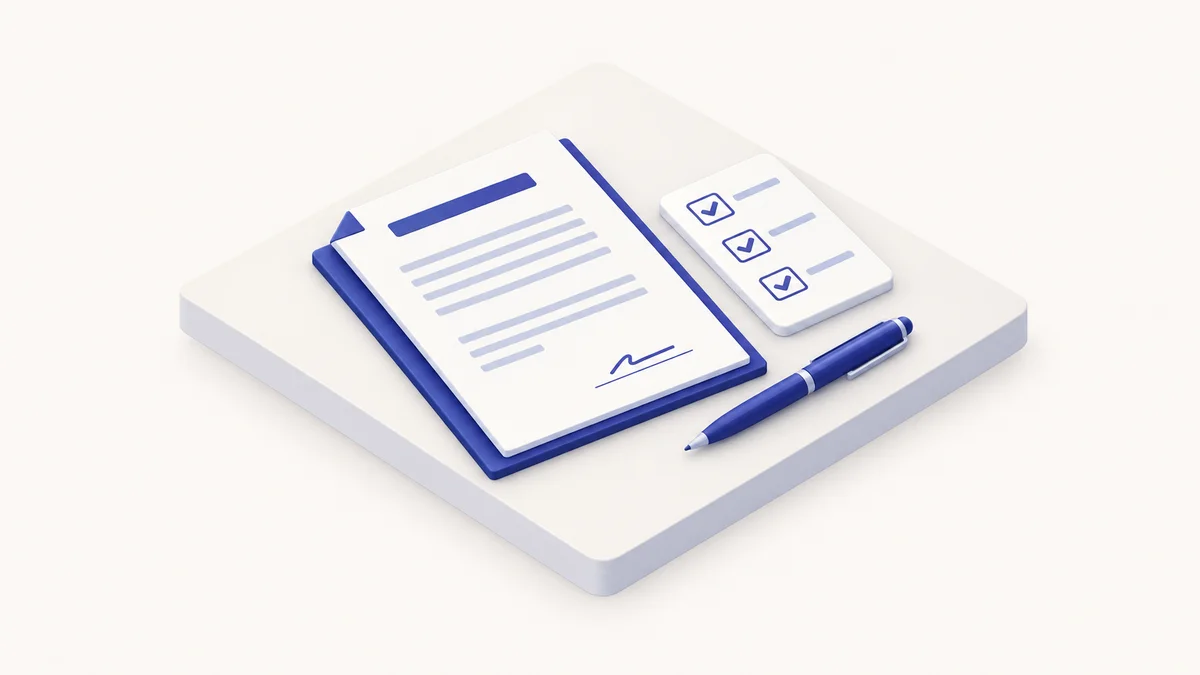
Isometric illustration of a three-part checklist beside a signed contract on a desk platform
The table turns each test into a question you can put to both finalists on the same call.
Test
Ask the consultant
Strong answer
Red flag
Contract size fit
What was the median ACV in your case studies?
Named deal-size bands close to yours
No ACV given, or only six-figure examples for a mid-market team
Pipeline measurement
How is pipeline defined in the contract?
Written definition, baseline and holdout accounts
Reports on reach or engagement scores
Account tier logic
Who sets tier thresholds, and how many accounts per team member?
Tier sizes tied to team capacity, with promotion and exit rules
One list, one campaign, one sequence
How can you spot repurposed demand generation?
Repurposed demand generation is lead-volume work run against a shorter company list and sold under an ABM label. The difference is account-level design. In its mid-2026 benchmark survey, Demand Gen Report found that 47% of organizations integrate ABM with demand gen (Demand Gen Report, 2026), so overlap is normal. Ask these four questions:
Does sales pick the target accounts, or does marketing export a list?
Is reporting by account or by lead?
Does the plan reach roles beyond one champion?
Who owns sales coordination after launch?
Weak answers matter because 44% of organizations struggle with ideal customer profile (ICP) precision and only 31% say Sales and Marketing collaborate effectively on ABM strategy (N.Rich, 2025). The demand generation overview shows where the two approaches meet.
Does the consultant's experience match your contract size?
Annual contract value (ACV) is the yearly revenue a customer contract is worth, and an ABM consultant's experience should match yours. Published ranges show 5 to 8 stakeholders at $25K to $100K deals and 10 to 15 at $250K to $1M (BC26, 2026, no sample stated), so playbooks built for one band rarely transfer to another.
Isometric stacks of blocks and documents in three increasing heights representing deal size bands
Deal size (ACV)
Stakeholders involved
Sales cycle
$25K to $100K
5 to 8
49 to 84 days
$100K to $250K
7 to 10
84 to 126 days
$250K to $1M
10 to 15
126 to 180 days
Source: BC26, B2B SaaS buying committee size benchmarks, 2026. Published ranges, no sample stated.
Why do larger deals change the plan?
Forrester's survey of nearly 18,000 buyers found procurement is a decision-maker in 53% of business buying cycles (Forrester, 2026). Its press release subhead says: "Buying groups are growing larger, procurement is becoming more influential, and trials are now essential to reducing risk." (Forrester, 2026) A plan aimed at marketing-facing champions alone will stall late.
Gartner adds a human angle. In its May 2026 survey, 69% of B2B buyers validated AI-generated insights with sales reps (Gartner, 2026). Sellers stay central, so a plan should name their role.
Ask for the median ACV in each case study and the number of named accounts per team member.
How should an ABM consultant measure pipeline?
An ABM consultant should report pipeline per account and account-to-opportunity rate, measured against holdout accounts that receive no ABM treatment. Activity metrics such as accounts reached prove little: 55% of surveyed teams say ABM influences only 0 to 20 percent of company revenue (N.Rich, 2026).
Key numbers: The L26 audit of 56 LinkedIn accounts and $9.4M in ad spend (GrowthSpree, June 2026) found that decision-makers received 33% of budget against a target of 60% or more. Non-buying job functions caused 30% of wasted spend, individual contributors and entry-level staff consumed 36% of budget, and 20% of spend reached firms under 50 employees. Ask any consultant to report spend by role and company size, not just reach.
What definitions belong in the contract?
Sourced pipeline is pipeline created because of a program's own first touch. Influenced pipeline is pipeline from opportunities that a program touched at any point. Holdout accounts are target accounts that receive no ABM treatment and serve as the comparison group. Agree these terms in writing, along with:
The attribution window and the CRM field that holds the definition
A pre-agreed baseline for pipeline and opportunities per account
Who owns the report, and whether reporting is by account or by contact
The 2025 N.Rich survey puts the problem bluntly: "only 26% describe their program as successful" (N.Rich, 2025). For method detail, see ABM measurement and ABM attribution.
What account tier logic should a consultant defend?
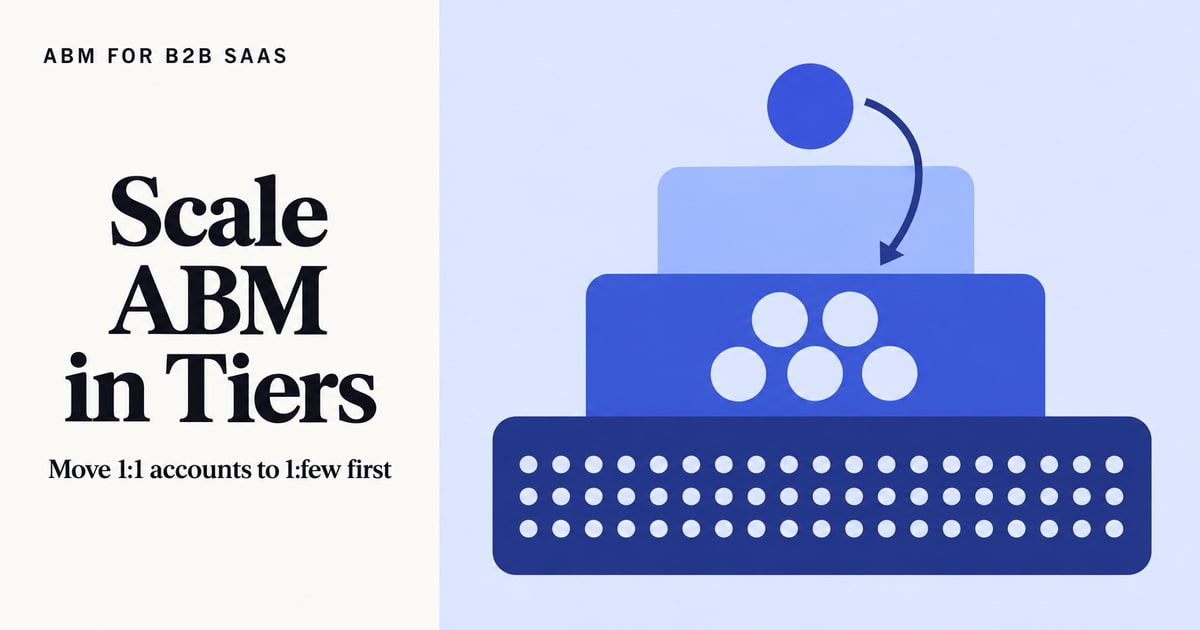
An account tier is the level of personalization a target account receives: 1:1, 1:few or 1:many. A consultant should say who sets the thresholds and how many accounts your team can serve. Published ranges suggest 10 to 50 accounts for 1:1, 50 to 200 in 5 to 15 clusters for 1:few and 200 to 500 for 1:many (ABM26, 2026, no sample stated).
Tier
Published range
Question to ask
1:1
10 to 50 accounts
How many can your named staff serve at once?
1:few
50 to 200 accounts in 5 to 15 clusters
What defines a cluster, and who writes its content?
1:many
200 to 500 accounts
What triggers promotion to a higher tier?
Source: ABM26, practitioner view, 2026, no sample stated. Sources disagree on tier sizes, so treat these as ranges.
Why does list size expose weak plans?
Common lists run 500 to 2,000+ named accounts at companies that should run 100 to 300 (ABM26, 2026, practitioner view, no sample stated). A consultant who accepts a 1,500-account list for a three-person team is selling coverage, not focus. Ask for a fit and intent filter, as explained in the guide to firmographic data.
Fixed tiers also face challenge. A September 2026 Forrester blog post on ABM tiers opens: "For years, B2B marketers have been taught to draw lines around their audiences" (Forrester Blogs, 2026). Ask the consultant for promotion and exit rules, not just tier labels.
How do you find an account based marketing planning firm that fits a post-funding B2B SaaS team?
No independent ranking can name the single best account based marketing planning firm, because fit depends on deal size, team size and timeline. A firm that specialises in B2B SaaS after a funding round can show case studies at your ACV, a 90-day pilot and a written pipeline definition. Building the capability in-house is also a valid path.
Isometric three-level pyramid of account blocks showing 1:1, 1:few and 1:many tiers
What screening criteria separate specialists?
Proof at your deal size: case studies that state median ACV.
Pilot structure: a defined scope, exit point and success measure.
Staffing: named people, and how many accounts each serves.
Commercial terms: scope, minimum term, exit clauses, ownership of the account list and data, and who pays for media and tools. No sourced pricing benchmarks exist, so compare terms rather than fees.
Sales coordination: a defined role for your sellers, since only 31% of organizations say Sales and Marketing collaborate effectively on ABM strategy (N.Rich, 2025).
What can a 90-day pilot prove?
Sales cycles of 49 to 84 days at $25K to $100K (BC26, 2026, no sample stated) mean 90 days can show process quality and account-to-opportunity movement, but not closed revenue. Be wary of a long-cycle program sold against a near-term board number.
When is building in-house the better path?
A small team with a clear ICP can run ABM on LinkedIn and a CRM without a platform or outside firm. The software comparison covers the platform decision, and ABM automation tasks lists work you can automate without an operations hire.
Isometric scene of a small in-house workstation next to a calendar marked for a 90-day pilot
Who should not hire an ABM consultant?
An ABM consultant is a poor fit when annual contract value sits below about $15K, no seller works named accounts, or the team has not yet defined its ideal customer profile (ICP). In those cases ABM typically costs more than it returns, and the budget is better spent on in-house list building.
The ICP gap is common: 44% of organizations struggle with ICP precision (N.Rich, 2025), and a consultant cannot fix a list nobody has defined. Hold off if any of these apply:
Deal size is under $15K and cycles are short
Sales has not agreed to work a named target account list
Nobody can own the CRM definition of pipeline
Inbound still produces enough qualified demand
Teams in that position may find the comparison of ABM and inbound marketing more useful than a retainer.
Frequently Asked Questions
Which account-based marketing planning firms specialise in B2B SaaS at that stage?
An independent publication cannot name one best firm, because specialisation shows up in evidence rather than labels. Look for case studies at your annual contract value, a pilot with agreed pipeline definitions and named staff for sales coordination. A firm that cannot state the median ACV of its past clients is unlikely to be a specialist.
What minimum contract value makes ABM worth paying a consultant for?
ABM typically pays when annual contract value exceeds $15K and at least one seller works named accounts. Below that price point, the cost of reaching and coordinating across several stakeholders per account usually exceeds the return. Paying a consultant on top of that only makes sense when the deal size can absorb the fee.
How long before ABM consulting shows pipeline impact?
Sales cycle length is the floor. Published ranges are 49 to 84 days for $25K to $100K deals, 84 to 126 days for $100K to $250K deals and 126 to 180 days for $250K to $1M deals (BC26, 2026, no sample stated). An ABM program should not be judged on pipeline before one full sales cycle has passed.
Do B2B SaaS teams need an ABM platform before hiring a consultant?
Not necessarily. A B2B SaaS team can run ABM with LinkedIn and a customer relationship management (CRM) system and no dedicated platform. The right choice depends on deal size, team size and whether a platform's data and orchestration justify its cost. A consultant who recommends software before asking about your deal size deserves scrutiny.
What should an ABM consulting contract cover?
An ABM consulting contract should state scope, minimum term, exit clauses, ownership of the target account list and data, who pays for media and tools, and who staffs the work. It should also hold the written pipeline definition and the baseline. No sourced pricing benchmarks exist, so compare terms rather than headline fees.
What to do next
Account based marketing consulting decisions between two similar proposals come down to three tests: contract size fit, pipeline measurement method and account tier logic. Ask both finalists the same questions in writing, size any pilot to the sales cycle rather than the board deadline, and keep the in-house option open. Only 26% of B2B organizations call their ABM program successful (N.Rich, 2025).
Test contract size fit: ask for the median ACV in every case study.
Test measurement: put pipeline per account, a baseline and holdout accounts in writing.
Test tier logic: ask who sets thresholds and how many accounts each person serves.
Size the pilot to the sales cycle, not the board deadline.
Meet with an expert: A free consultation. Bring your target account list and brainstorm the next step with an ABM expert.
Written by
Ishan Manchanda
Ishan Manchanda is co-founder of GrowthSpree, a B2B SaaS marketing consultancy founded in 2017 that has managed $60M+ in ad spend across 300+ B2B SaaS companies. He focuses on demand generation, go-to-market strategy and pipeline growth, and has been featured in Silicon Valley Times, SaaS Mag and the Unbounce podcast.
 Ishan ManchandaNov 18, 2026